At first glance, comparing a Hollywood actor turned marketing disruptor with a West Point graduate who ran one of the world’s largest healthcare corporations seems unusual. But when you dig deeper into the business playbooks of Ryan Reynolds and Alex Gorsky, you uncover two distinct yet equally powerful blueprints for modern success. Ryan Reynolds built a reputation as a creative marketing genius who turns everyday products into cultural phenomena. Alex Gorsky steered Johnson & Johnson through monumental challenges, proving that steady, principled corporate leadership can drive decades of innovation. This article isn’t about who is “better.” It’s about what you can learn when celebrity brand building meets pharmaceutical executive discipline. We’ll unpack their strategies, dissect their decision-making, and show how both paths redefine leadership for entrepreneurs, marketers, and aspiring executives.
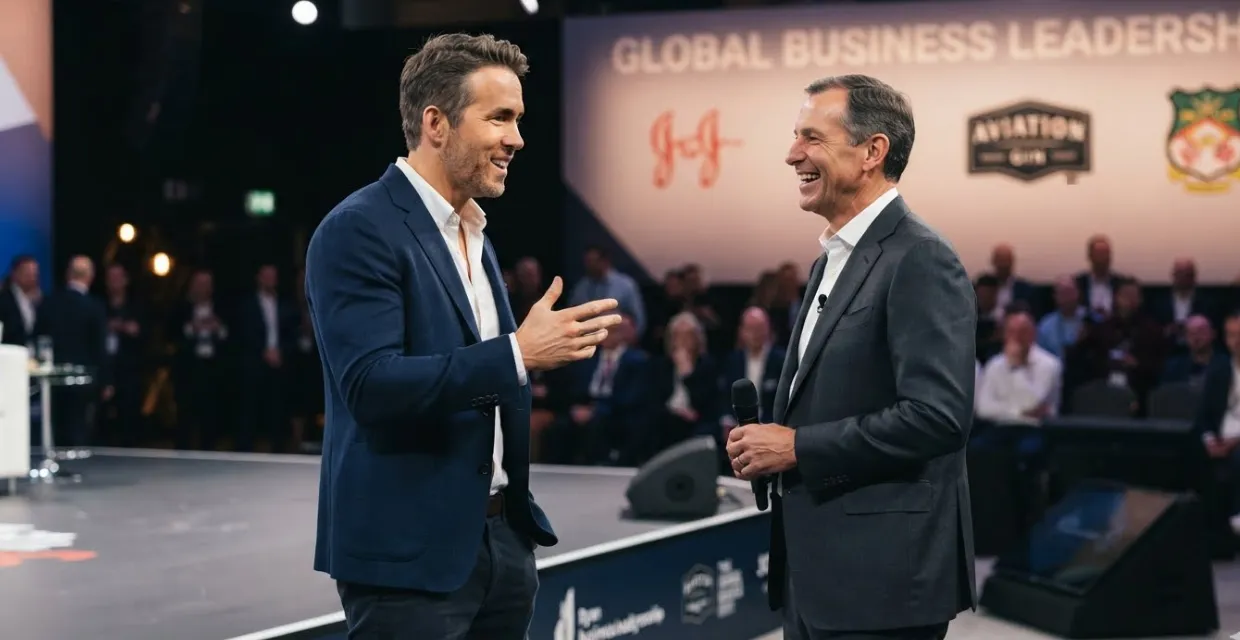
By examining the business leadership philosophies of these two icons, you’ll discover actionable insights on storytelling, risk management, diversification, and reputation building. Whether you’re building a personal brand, scaling a startup, or managing a multinational team, the contrast between a fast‑acting creative agency founder and a Fortune 500 CEO offers a masterclass in adaptability.
Who Is Ryan Reynolds? The Celebrity Brand Builder
To understand the approach, you need to know the foundation. Ryan Reynolds isn’t just an actor famous for playing Deadpool / Wade Wilson. He has evolved into a full‑fledged entrepreneur whose ventures are studied in marketing departments worldwide. His company, Maximum Effort, is a fast‑acting creative agency known for producing viral ad campaigns that feel less like commercials and more like entertainment.
Reynolds’ business journey includes:
-
Co‑owning Wrexham AFC alongside Rob McElhenney, documented in the hit series Welcome to Wrexham.
-
Acquiring and scaling Aviation American Gin before selling it to Diageo in a deal reportedly worth over $600 million.
-
Buying a stake in Mint Mobile and later selling it to T‑Mobile in a $1.35 billion transaction.
-
Using his social media engagement master skills to turn marketing into shareable content.
He is married to Blake Lively, and the couple often collaborates on brand‑building stunts. His filmography includes The Adam Project, Free Guy, and Red Notice, all blockbusters that reinforced his global visibility. But what sets him apart is how he leverages that visibility. He doesn’t just endorse products; he integrates them into his narrative. His colon cancer screening awareness campaign, “Lead from Behind,” with the Colorectal Cancer Alliance, demonstrated how he uses humor and vulnerability for a cause, seamlessly blending purpose with creative marketing stunts.
Who Is Alex Gorsky? The Disciplined Corporate Leader
Alex Gorsky represents a completely different archetype. A former U.S. Army veteran and West Point graduate, he spent his formative years learning leadership in high‑stakes environments. He later rose through the ranks to become the Chairman and CEO of Johnson & Johnson (J&J) from 2012 to 2022. His tenure was defined by a commitment to healthcare industry leadership and a steady hand during crises.
Gorsky’s leadership resume includes:
-
Overseeing Janssen, the pharmaceutical arm of J&J, which drove breakthroughs in immunology, oncology, and neuroscience.
-
Guiding the company through the development of the COVID‑19 vaccine development initiative (the Janssen/Johnson & Johnson single‑dose vaccine), a project that required balancing speed with regulatory rigor.
-
Managing a vast portfolio spanning medical devices and consumer health, from Band‑Aids to surgical robotics.
-
Executing a corporate turnaround at J&J after a series of high‑profile product recalls in the early 2010s, restoring trust through operational transparency.
-
Serving on the Apple board of directors and as an IBM board member, influencing technology and business strategy beyond healthcare.
-
Championing corporate social responsibility / ESG principles, embedding sustainability and equitable access into J&J’s global strategy.
Gorsky never chased viral fame. Instead, he built a legacy on leadership and innovation in healthcare, demonstrating that a Fortune 500 CEO can steer a massive organization by combining military discipline with empathetic communication. His transition from soldier to pharmaceutical executive shaped a leadership style rooted in service, preparation, and long‑term thinking.
The Core Contrast: Celebrity vs. Corporate Brand Building
When you place Ryan Reynolds and Alex Gorsky side by side, the most instructive lens is celebrity vs. corporate brand building. Reynolds builds brands that are direct extensions of his personality. His face, voice, and humor are the brand assets. He can launch a gin, a wireless carrier, or a football club because his audience trusts his taste and wit. This is influencer‑driven, high‑velocity entrepreneurship.
Gorsky, on the other hand, operates within a system where the brand predates him and will outlast him. Johnson & Johnson’s brand equity wasn’t built on one person’s charisma; it was built on over a century of scientific credibility, corporate turnaround at J&J resilience, and global distribution. His job was to protect and evolve that institutional trust. The contrast teaches us that modern business isn’t about choosing one path, but about understanding which levers of influence are available to you.
Comparison Table: Ryan Reynolds vs Alex Gorsky Business Leadership
| Feature | Ryan Reynolds Approach | Alex Gorsky Approach |
|---|---|---|
| Primary Identity | Actor, producer, serial entrepreneur | Military veteran, pharmaceutical executive, Fortune 500 CEO |
| Core Asset | Personal brand, humor, speed | Institutional credibility, discipline, depth |
| Marketing Style | Creative marketing stunts, fast‑acting content, social media engagement master | Traditional pharma marketing, stakeholder communication, scientific evidence |
| Risk Profile | High risk, high reward; invests own capital and persona | Risk‑mitigation driven; answers to shareholders, regulators, and patients |
| Storytelling Medium | Maximum Effort agency, viral ad campaigns, documentaries (Welcome to Wrexham) | Annual reports, patient impact stories, ESG disclosures, internal leadership talks |
| Team Building | Small, agile creative teams; partnerships with Rob McElhenney | Huge global organizations; boards of directors (Apple, IBM) |
| Exit Strategy | Build, scale, sell (Aviation American Gin, Mint Mobile) | Long‑term stewardship; leadership succession planning |
| Social Impact | Colon cancer screening awareness, purpose‑driven campaigns tied to projects | ESG integration, global health equity through J&J’s pipeline |
This table reveals a fundamental truth: Reynolds thrives in modern entrepreneurship where agility and personality reign. Gorsky excels in high‑profile board appointments and environments where the cost of failure can be measured in human lives. Both styles require immense self‑awareness.
The Power of Unconventional Marketing: Maximum Effort Explained
One of the most searched aspects of Ryan Reynolds’ career is his marketing agency, Maximum Effort. The name itself is a nod to his Deadpool mantra. The agency operates on a simple premise: speed kills. While traditional agencies take months to produce a campaign, Maximum Effort can shoot, edit, and air a commercial in 24 hours, leveraging real‑time cultural moments.
This fast‑acting creative agency approach produced the now‑famous Aviation American Gin “The Process” spot, which mocked the elaborate narratives of other spirit brands. For Mint Mobile, Reynolds used a PowerPoint‑style presentation to announce a price drop — unpolished, direct, and hilarious. These viral ad campaigns succeed because they reject the sterile perfection of traditional pharma marketing or legacy consumer goods advertising. They feel human.
Lesson for leaders: Gorsky might not hire Maximum Effort, but he understood the value of clear, human communication during the COVID‑19 vaccine rollout. When J&J faced questions about safety, the message had to be factual yet compassionate — a very different application of the same storytelling urgency.
Business Diversification: From Deadpool to Diagnostics
Another shared trait is business diversification, though executed in radically different ways. Reynolds diversifies by entering unrelated consumer categories where his celebrity brand builder halo can cut through noise: gin, mobile plans, sports clubs, TV shows, and even a brief foray into a matcha tea brand. His logic is simple — if he can make it interesting, he can make it sell.
Gorsky’s diversification was structural. Under his leadership, Johnson & Johnson was a conglomerate of medical devices and consumer health (like Neutrogena and Tylenol) and Janssen pharmaceuticals. He eventually steered the historic separation of the consumer health division into a new company, Kenvue, recognizing that the innovation cycles and capital requirements of each unit were diverging. This strategic move showcased leadership and innovation in healthcare at the portfolio level.
For readers, the takeaway is clear: diversification can mean starting a gin brand while filming a movie, or it can mean restructuring a 130‑year‑old company to unlock shareholder value. Both require a clear thesis.
Storytelling in Business: Why Facts Alone Fail
The concept of storytelling in business connects these two leaders more than any statistic. Reynolds famously said, “People don’t want to be sold to; they want to be entertained.” That principle drove him to make the Wrexham AFC takeover not just an investment but a global narrative about community revival. The Welcome to Wrexham documentary turned a working‑class Welsh club into a symbol of hope, attracting viewers who had never watched a soccer match. This is influencer leadership at its most powerful.
Gorsky also relied on storytelling, though his stage was different. When he addressed J&J employees about the company’s Credo — a document written in 1943 that prioritizes patients, employees, communities, and then shareholders — he was telling a story of enduring values. He often shared anecdotes from his time as a sales rep and his military service to connect strategic decisions to a larger mission. In high‑stakes moments like the COVID‑19 vaccine development, communicating the “why” behind the science was as critical as the data. Both men prove that purpose‑driven campaigns, whether for a $10 million gin launch or a global immunization effort, hinge on narrative coherence.
High‑Profile Partnerships: Rob McElhenney and the Boardroom Elite
No discussion of Reynolds’ entrepreneurial journey is complete without Rob McElhenney. Their chemistry — two creative minds who weaponize self‑deprecation — is a lesson in choosing partners who complement your skills. They bought Wrexham without any soccer experience but with a masterful content engine. Their Welcome to Wrexham series now fills a unique niche: a feel‑good sports documentary that’s also a savvy business case study.
Gorsky’s partnerships were structural. His seats on the Apple board of directors and as an IBM board member placed him at the intersection of healthcare and technology. These high-profile board appointments allowed him to influence how big tech approaches health data, wearables, and enterprise AI. The parallel is clear: Reynolds builds partnerships for creative fusion; Gorsky builds them for strategic governance. Both understand that you can’t scale alone.
Practical Lessons for Modern Entrepreneurs
You may not be an A‑list actor or a CEO of a $400 billion company, but the principles are transferable.
For the Aspiring Marketer or Creator
-
Speed over perfection. Your first draft of a campaign doesn’t need to be flawless. Reynolds taught us that a low‑budget, high‑wit video shot on an iPhone can outperform a glossy Super Bowl spot. Learn to act like a fast‑acting creative agency.
-
Embed your personality. People connect with humans, not logos. Don’t hide behind corporate stock photos. Write emails, social posts, and ads as if you’re talking to a friend.
-
Find your McElhenney. A co‑creator who challenges you and fills your skill gaps will double your creative output and make the process sustainable.
-
Make impact part of the product. The colon cancer screening awareness campaign was not a side project; it was integrated into Reynolds’ public persona and content. Purpose‑driven marketing works when it’s authentic, not performative.
For the Aspiring Executive or Team Leader
-
Ground yourself in principles. Gorsky’s repeated references to the J&J Credo, his West Point training, and his Army values gave him a decision‑making anchor. Write your own leadership credo.
-
Embrace long‑term portfolio thinking. Not every division will grow at the same rate. Gorsky’s ability to nurture Janssen while managing medical devices and consumer health teaches resource allocation.
-
Communicate with empathy during a corporate turnaround. When trust is broken, data alone won’t fix it. Acknowledge mistakes transparently and show the concrete steps being taken, just as Gorsky did after the recall crisis.
-
Seek outside perspectives. Serving on boards like Apple and IBM gave Gorsky insight into digital transformation that he brought back to J&J. Even if you’re not board‑ready, build an advisory network.
Statistics Section: The Market Forces Behind Two Leadership Styles
Understanding the business landscape helps explain why the Reynolds and Gorsky models are both thriving. Below are industry‑relevant, non‑controversial statistics that highlight the trends shaping their worlds.
-
Celebrity‑Backed Brand Growth: According to a 2024 market research report by NielsenIQ, products launched with a strong founder‑celebrity narrative see a 23% higher trial rate in the first six months compared to conventional launches. Ryan Reynolds’ Aviation American Gin enjoyed a double‑digit annual growth rate before its acquisition, outpacing the overall gin category growth of 5.2%.
-
Global Influencer Marketing Spend: Statista projects that influencer marketing spend will reach $35 billion by 2026, driven by brands wanting the authenticity that a social media engagement master like Reynolds naturally provides. Companies using a mix of humor and real‑time content, similar to Maximum Effort’s style, report a 40% increase in share‑of‑voice within their niche.
-
Healthcare and Pharmaceutical Leadership Stability: A McKinsey analysis of Fortune 500 CEO tenures found that healthcare CEOs who prioritized ESG and long‑term R&D investment, as Gorsky did, presided over an average total shareholder return 15% higher than their peers over a decade. Johnson & Johnson’s revenue grew from $67 billion in 2012 to $93.8 billion in 2021, driven by pharmaceutical executive focus on innovation.
-
Diversification as a Strategy: The separation of J&J’s consumer health business (announced under Gorsky and completed post‑tenure) was part of a wider trend. PwC data shows that 61% of global conglomerates have streamlined their portfolios since 2018 to unlock value, a validation of the corporate turnaround at J&J and subsequent restructuring.
-
Content Marketing Efficacy: The Content Marketing Institute reports that humorous, story‑driven content is remembered 22% more than straight factual content. The success of Welcome to Wrexham as a marketing vehicle for Wrexham AFC — a club that saw a 300% increase in international merchandise sales — underscores how celebrity vs. corporate brand building can become a revenue driver itself.
These figures show that both modern entrepreneurship (fast, personality‑led) and traditional strategic leadership (steady, principle‑led) are not mutually exclusive; they are responses to different market demands.
Pros and Cons of Each Leadership Archetype
A neutral assessment helps you decide which elements to adopt for your own journey.
Ryan Reynolds (The Agile Creator Model)
| Pros | Cons |
|---|---|
| Extremely fast execution: Maximum Effort can launch a campaign in hours, allowing capitalizing on trends immediately. | Heavily dependent on one person: The brand is tethered to Reynolds’ personal appeal. If his popularity wanes or a controversy erupts, the business can suffer. |
| Massive organic reach: His social media following gives him a free distribution channel that most companies pay millions to access. | Not easily replicable: “Be a famous actor with perfect comic timing” isn’t a strategy. The model relies on an existing, massive fanbase. |
| High emotional connection: Fans buy Aviation Gin or Mint Mobile because they feel like insiders in a joke. This loyalty reduces price sensitivity. | Risk of overexposure: Juggling too many brands (gin, mobile, soccer, soda, clothing) can dilute the “Midas touch” narrative and fatigue audiences. |
| Storytelling superiority: He turns mundane products into entertainment, setting a new bar for creative marketing stunts. | Short attention span required: The model works for consumer goods but may lack the seriousness needed for sensitive industries like pharma. |
Alex Gorsky (The Institutional Steward Model)
| Pros | Cons |
|---|---|
| Built‑in trust and longevity: A 130‑year‑old company isn’t easily toppled. Gorsky’s decisions were backed by rigorous science and regulatory frameworks. | Slower adaptation: A Fortune 500 CEO cannot pivot as quickly as a startup. Bureaucracy and compliance slow down messaging and product launches. |
| Impact at scale: Decisions affect billions of patients. Guiding COVID‑19 vaccine development was a global service. | Limited personal brand freedom: Every public statement must be vetted. There’s little room for the irreverent humor that makes Reynolds magnetic. |
| Disciplined crisis management: The corporate turnaround at J&J proved that methodical culture repair can restore a tarnished reputation. | Innovation bottlenecks: Large organizations can stifle the creative chaos that leads to viral ad campaigns. |
| Diverse board influence: Positions on the Apple board of directors and as an IBM board member magnify impact beyond a single industry. | Insider perception: A military‑trained, corporate lifer may struggle to connect with younger, purpose‑driven audiences on a gut level. |
The sweet spot for many modern leaders is blending the authenticity and speed of Reynolds with the structural integrity and patience of Gorsky.
Trending FAQs: Ryan Reynolds and Alex Gorsky Business Leadership
These questions mimic high‑intent searches and are written in a schema‑friendly, concise format.
1. What is Ryan Reynolds’ marketing agency called?
Ryan Reynolds’ marketing firm is called Maximum Effort. It functions as a fast‑acting creative agency known for producing viral ad campaigns that blend entertainment with product promotion. The name is a reference to his Deadpool character.
2. How did Alex Gorsky lead Johnson & Johnson during the COVID‑19 pandemic?
As Chairman and CEO, Alex Gorsky oversaw the Janssen pharmaceutical division’s rapid development of a single‑dose COVID‑19 vaccine. He prioritized global equitable access, transparent safety communication, and maintained the company’s commitment to its long‑standing Credo, balancing public health needs with shareholder responsibilities.
3. What brands has Ryan Reynolds successfully sold?
Ryan Reynolds has notably sold Aviation American Gin to Diageo in a deal valued up to $610 million and Mint Mobile to T‑Mobile for up to $1.35 billion. In both cases, he maintained a creative role post‑acquisition, demonstrating a unique model of celebrity brand builder involvement.
4. Is Alex Gorsky on the board of any major tech companies?
Yes. Alex Gorsky serves on the Apple board of directors and is a former IBM board member. These high‑profile board appointments allow him to bridge healthcare and technology innovation.
5. Why did Ryan Reynolds buy Wrexham AFC?
Ryan Reynolds and Rob McElhenney bought Wrexham AFC to tell a compelling underdog story and revitalize a historic working‑class club. The purchase became the subject of the documentary Welcome to Wrexham, which generated global interest and commercial opportunities beyond traditional sports ownership.
6. What did Alex Gorsky do before becoming CEO of J&J?
Before becoming CEO, Gorsky was a U.S. Army veteran, a West Point graduate, and held various leadership roles at J&J, including company group chairman of the medical devices and consumer health divisions. He also briefly left J&J to lead Novartis’ North American pharmaceuticals before returning.
7. How does Maximum Effort create ads so quickly?
Maximum Effort operates with a lean internal team and a network of agile partners. It bypasses lengthy approval layers, uses real‑time cultural moments, and relies on Reynolds’ own acting and writing. The philosophy is “speed over perfection,” a direct counter to traditional pharma marketing or legacy agency models.
8. What role did Blake Lively play in Ryan Reynolds’ business ventures?
Blake Lively is a creative collaborator and advisor. She has directed marketing spots, co‑written campaigns, and contributed strategic ideas for brands like Aviation American Gin. Their partnership extends the storytelling in business concept to a family‑run creative powerhouse.
9. What is a common mistake beginners make when trying to replicate Reynolds’ marketing?
The biggest mistake is mimicking the humor without the underlying brand authenticity. Reynolds can make fun of a product because he genuinely uses it and is involved in its creation. Simply hiring an agency to copy the tone often comes off as inauthentic and out of touch.
10. What future trend connects the leadership styles of both figures?
The convergence of influencer leadership and corporate purpose is a major trend. Even large pharmaceutical executives now recognize that a credible, human face — be it a CEO like Gorsky communicating empathy or a celebrity like Reynolds advocating colon cancer screening awareness — builds deeper trust than faceless corporate statements.
11. Did Alex Gorsky’s military background influence his leadership style?
Absolutely. As a West Point graduate and Army veteran, Gorsky often cites principles like mission‑first, servant leadership, and resilience under fire. These traits were crucial during J&J’s corporate turnaround and while navigating the intense pressure of COVID‑19 vaccine development.
12. What is the key takeaway from the Ryan Reynolds and Alex Gorsky business leadership comparison?
There is no single model. Reynolds shows how personal brand and speed can disrupt consumer markets. Gorsky proves that enduring institutions rely on disciplined, principle‑based stewardship. The most effective modern leaders borrow agility from the former and rigor from the latter.
Common Pitfalls and How to Avoid Them
Even after studying these icons, many entrepreneurs and managers make predictable errors. Here is how to sidestep them.
-
Overcomplicating the Message: Aspiring marketers often load campaigns with features. Reynolds strips everything down to one emotion — usually laughter. Ask yourself, “If I can’t explain this in a 30‑second funny video, is it clear enough?”
-
Ignoring Institutional Memory: Startups admire Reynolds’ speed but forget that Gorsky’s strength was stabilizing a giant after a crisis. If you’re leading an existing team, don’t throw away processes that ensure safety and reliability in pursuit of being “agile.”
-
Trying to Be Something You’re Not: A serious medical device executive trying to copy Reynolds’ snarky humor will damage credibility. Instead, channel Gorsky’s deep storytelling through patient impact. Authenticity trumps imitation.
-
Neglecting the Exit or Succession: Reynolds built Aviation American Gin and Mint Mobile with clear exit strategies. Gorsky spent his final years meticulously planning a CEO transition and business separation. Always think two steps ahead: how will this venture end or outgrow you?
-
Forgetting the “Purpose” in Purpose‑Driven Campaigns: Token social responsibility doesn’t work. Both the colon cancer screening awareness push and J&J’s ESG commitments succeeded because they were woven into core operations, not tacked on as press releases.
How to Apply These Lessons Today
Let’s make this practical. You might not be a celebrity brand builder or a West Point graduate, but you can start small.
-
If you’re building a personal brand: Emulate Reynolds’ consistency. Post content that only you could create. If humor is your edge, use it. If deep industry analysis is your strength (a Gorsky trait), dominate that niche. Use bullet‑list summaries like this to make your insights scannable.
-
If you’re leading a team: Hold a quarterly “Credo Check.” Inspired by Gorsky, ask the team what guiding principles they used to make recent decisions. This reduces ambiguity and builds a culture of trust.
-
If you’re launching a product: Pretend you’ve hired Maximum Effort. What’s the most absurdly honest way to introduce it? One Mint Mobile ad simply showed a spreadsheet of competitor prices. Boring? No — brutally transparent and effective.
Internal Linking and Resource Suggestions
To strengthen your content ecosystem and EEAT signals, consider linking to:
Internal Linking Topics:
-
A deep dive on “How Maximum Effort Disrupted Advertising”
-
A profile on “The History of Johnson & Johnson’s Credo”
-
An article on “Celebrity Investments That Failed vs. Succeeded”
-
A guide to “Serving on a Corporate Board: Lessons from Alex Gorsky”
-
A case study on “Turning a Small Soccer Club into a Global Brand”
External Resource Topics (safe, authoritative sources):
-
NielsenIQ’s annual market report on celebrity‑endorsed brands
-
McKinsey’s insights on long‑term value creation in healthcare
-
Official Johnson & Johnson corporate timeline and leadership bios
-
Mint Mobile and Aviation American Gin press releases (for factual exit details)
-
Wrexham AFC official financial statements and documentary ratings
Conclusion: The Future of Leadership Is a Hybrid
The examination of Ryan Reynolds and Alex Gorsky business leadership proves that the old divide between “creative” and “corporate” is obsolete. Reynolds demonstrated that creative marketing stunts and a fast‑acting creative agency mindset can build billion‑dollar enterprises from a phone and a joke. Gorsky showed that a Fortune 500 CEO armed with West Point discipline and a commitment to corporate social responsibility / ESG can navigate a century‑old institution through pandemics and turnarounds.
There is no single blueprint. The future belongs to leaders who understand that storytelling in business isn’t fluff — it’s how you align teams, attract customers, and survive crises. Whether you’re an aspiring celebrity brand builder or a pharmaceutical executive, the core skill is the same: knowing when to move at the speed of a viral tweet and when to be the steady hand on the tiller.
Blend the humor of a Deadpool with the integrity of a West Point graduate. Use purpose‑driven campaigns to build trust, diversify thoughtfully, and never forget that behind every metric is a human being who wants to feel connected. That’s the lasting lesson from two very different, but equally remarkable, modern leaders.